Begin with context, not a blank form
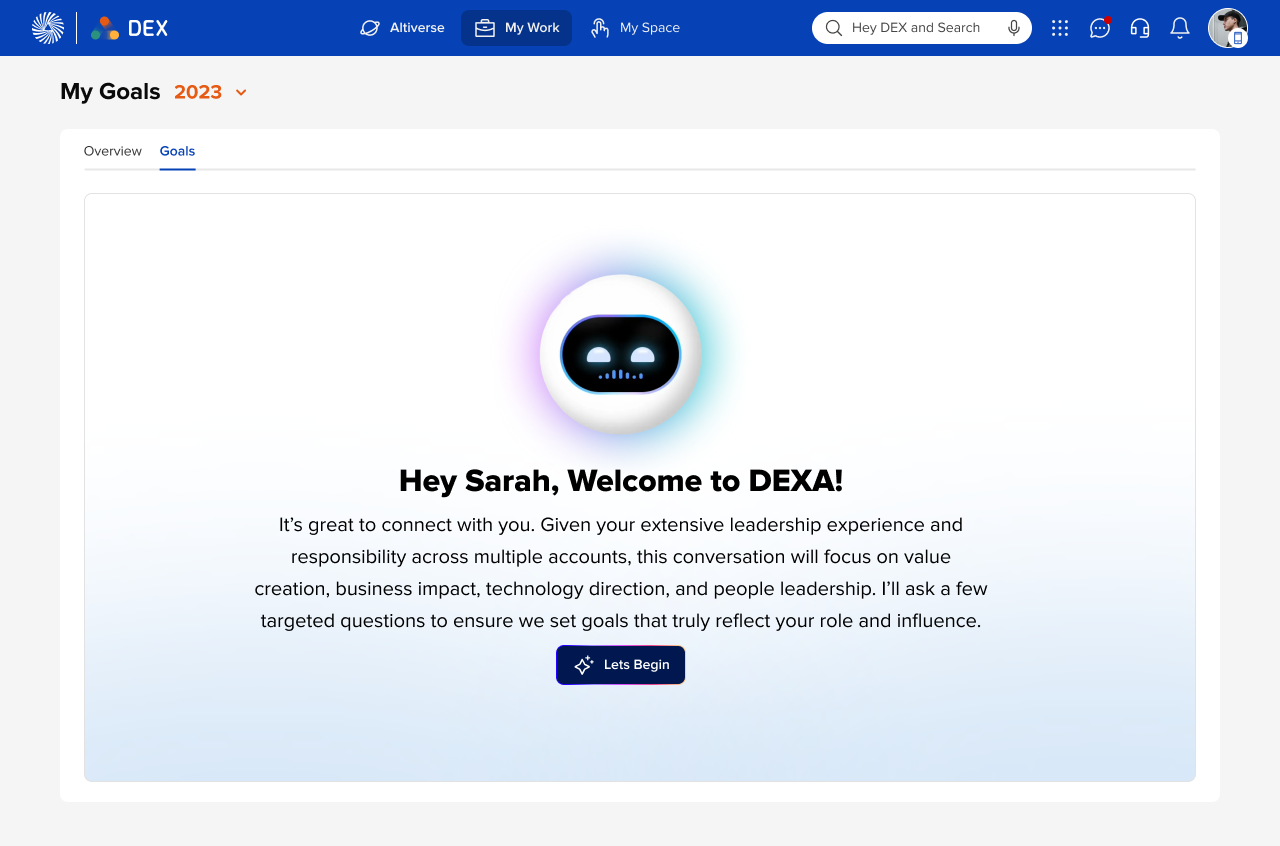
DEXA welcomes the employee and frames a focused conversation around responsibilities, business impact, technology direction and people leadership. This gives the AI enough context to help shape relevant goals.
Simplifying how employees set meaningful goals, review performance and grow their careers — with AI assistance embedded into the journey rather than added as a separate tool.

Most employees were already committed to client projects, so the business needed a goal-setting experience that asked for as little employee time as possible. I researched comparable approaches, proposed a conversational AI direction to the product team, and we brainstormed the concept together.
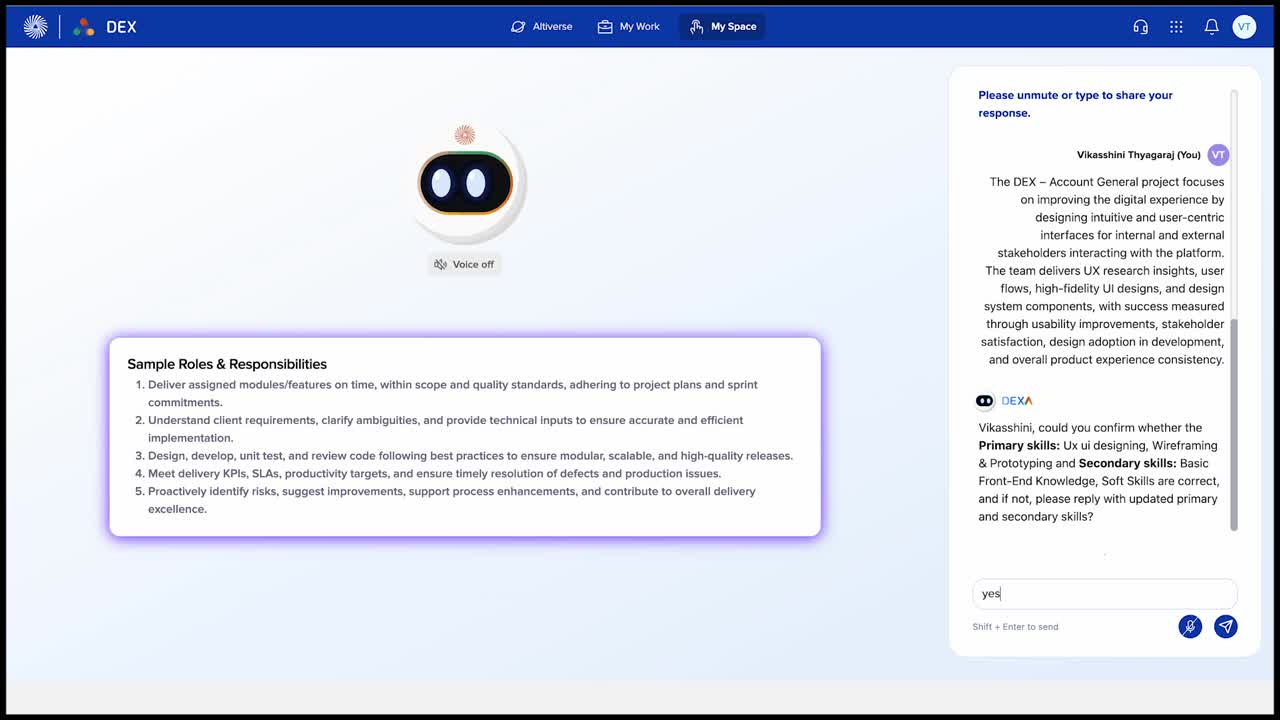
The walkthrough shows a connected journey: DEXA gathers context, proposes structured goal content, and returns the employee to a familiar goal-management experience where the goal can evolve over time.

DEXA welcomes the employee and frames a focused conversation around responsibilities, business impact, technology direction and people leadership. This gives the AI enough context to help shape relevant goals.

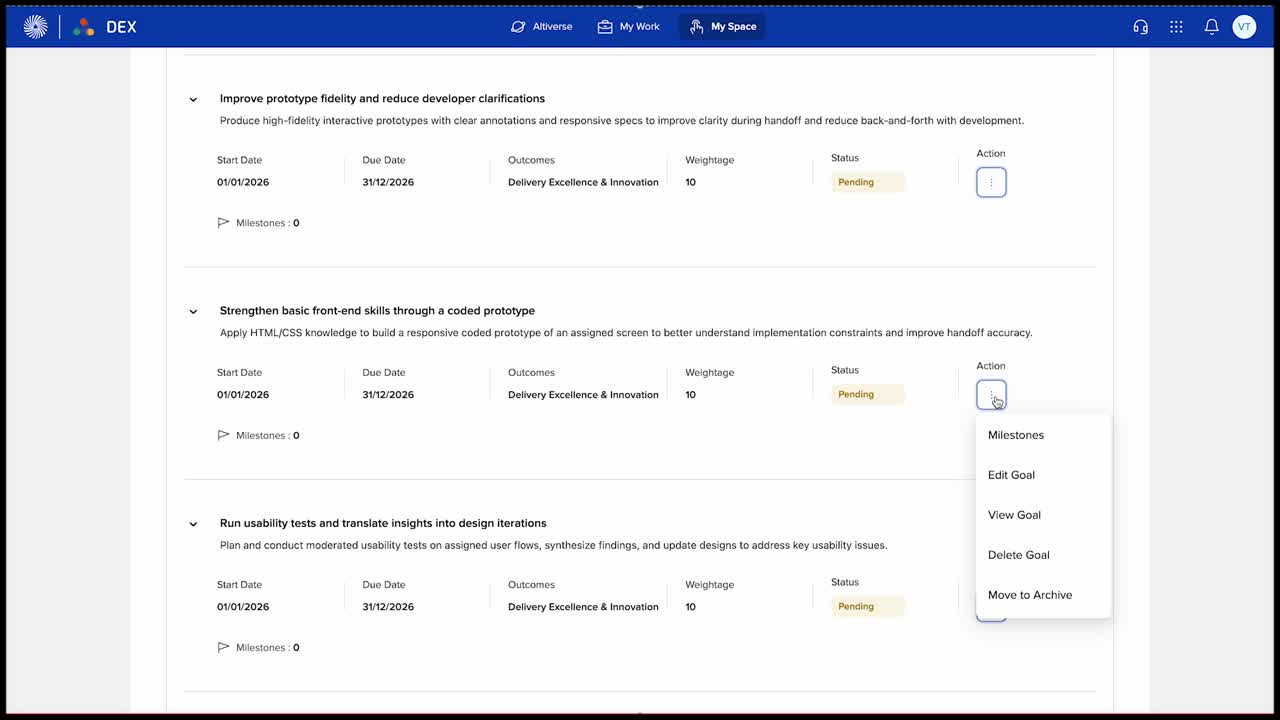
Generated goals sit inside the existing My Goals experience with dates, dimensions, weightage, status and actions. The AI interaction feeds the product workflow instead of replacing it.

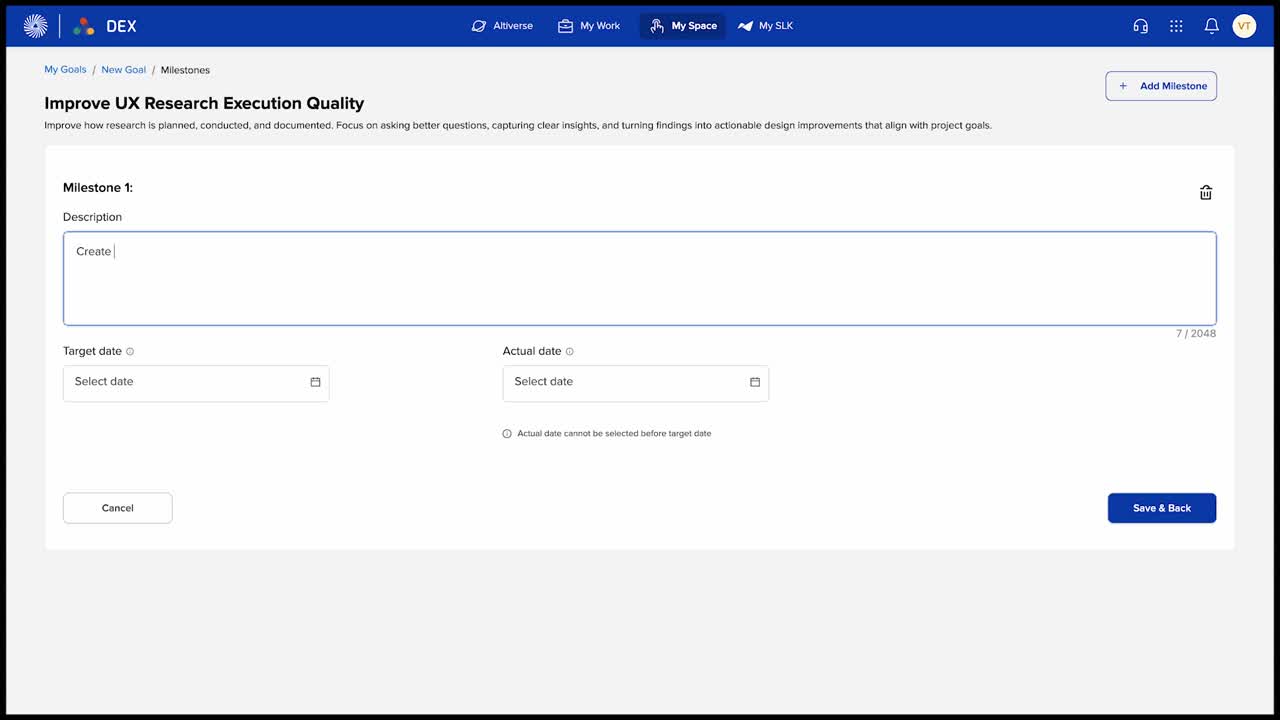
Employees can add milestones with descriptions, target dates and effort. This turns a high-level goal into a trackable plan and makes progress easier to review.

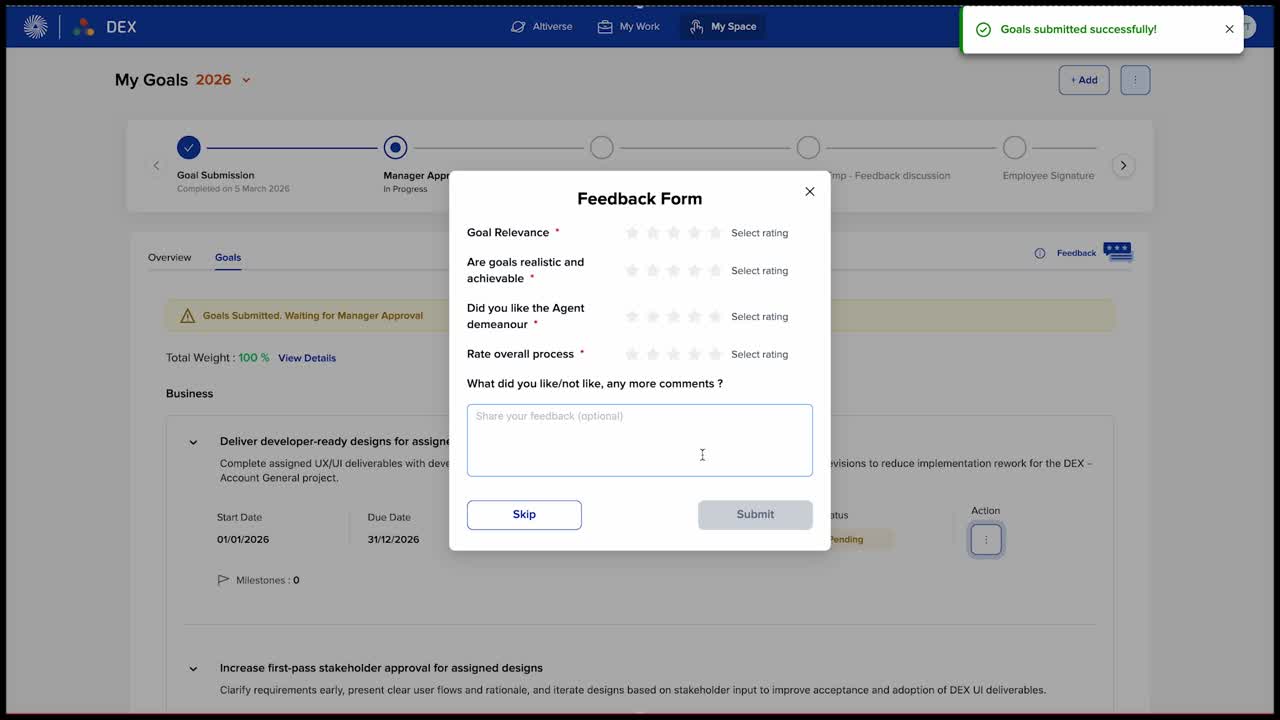
Feedback is part of the same journey, giving employees a clear way to capture reflection and support performance conversations without leaving the goal context.
I explored how other goal-setting experiences worked, focused the team on saving employee time, proposed the conversational AI concept, and pushed to bring separate goal categories into one reviewable experience.
Use dialogue to gather context and lower the effort required to start a meaningful goal.
Keep goal content editable and manageable through familiar actions rather than locking users into AI output.
Statuses, actions and progress cues help employees understand where a goal sits in its journey.
Instead of forcing employees through separate pages for each goal category, bring the categories into one place so they can review the complete set and proceed with less navigation.
The short walkthrough gives recruiters a quick view of the interaction model. The case study above distills the longer end-to-end walkthrough into the key goal lifecycle and supporting states.
The experience was positively received for making goal creation and review feel more guided and less time-consuming. The strongest product decision was not AI by itself—it was using AI to reduce the effort of getting started, then returning people to a familiar, editable performance workflow.
No confidential production metrics are presented here. The case study focuses on the problem, decisions, interaction model and stakeholder response I can accurately reconstruct from the project.